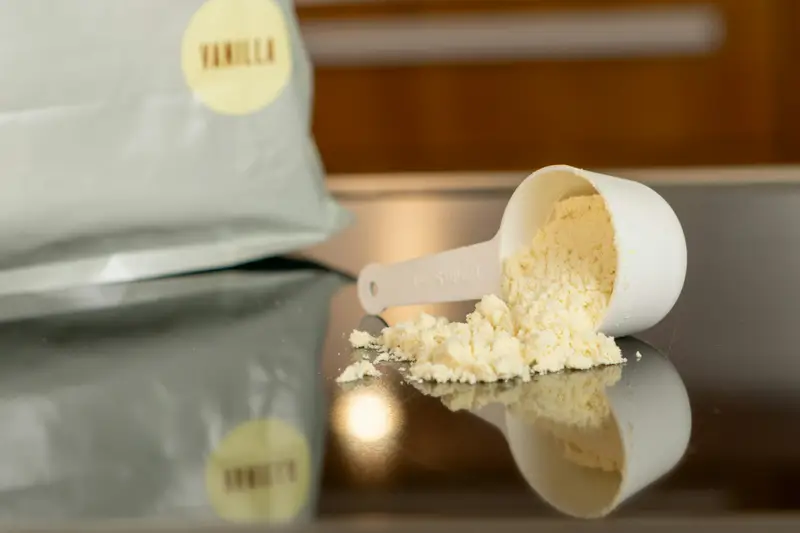
Both come from the same milk. The difference is how much fat, lactose and other material is filtered out.
The short version
| Feature | Concentrate | Isolate |
|---|---|---|
| Protein by weight | Typically about 70 to 80% | Typically 90% or more of the dry protein ingredient |
| Lactose, fat, carbs | More | Much less |
| Cost | Lower | Higher |
| Best for | Value, general use | Low carb, lactose sensitivity, cutting |
Percentages are industry-typical ranges for the ingredient, not a legal definition, and finished powders contain flavoring and sweeteners.
Hydrolyzed whey
Hydrolyzed whey is protein that has been partly broken down so it digests faster. Evidence that it builds more muscle than regular whey is limited, and it usually costs more. It can be a taste and tolerance choice rather than a performance one.
What real labels show
Scoop weight includes flavor and sweeteners, so label protein share is lower than the raw ingredient. In our data, an isolate such as Optimum Nutrition Gold Standard 100% Isolate gives 25 g protein in a 30 g scoop (83%) with 1 g carbs, while the Gold Standard blend gives 24 g in 31 g (77%) with 4 g carbs. See the full comparison.
Which should you buy?
- Healthy and not lactose-sensitive: concentrate or a blend is fine and cheaper.
- Lactose sensitive or cutting hard: isolate.
- Sensitive stomach: try hydrolyzed or unflavored isolate.
Frequently asked questions
Is whey isolate better than concentrate?
It is purer per scoop, not magically better for muscle. Choose by lactose tolerance, calories and budget.
Is whey blend a good option?
Yes. Blends combine isolate, concentrate and sometimes peptides at a middle price.